Best Time of Year for a Hot Air Balloon Ride in Napa Valley: Month-by-Month Guide

The best time for a hot air balloon ride in Napa Valley is April through May or September through October, when mild temperatures, full or harvest-gold vineyards, and fewer weather scrubs line up together. June is the honest runner-up, commonly cited by operators as the most reliably flyable month of the year even though it sits just inside the valley's foggier stretch. The window to avoid, if your schedule allows any flexibility at all, is deep winter, December through February, when rain drives the year's highest rate of cancellations. Every flight launches at sunrise no matter which month you pick, so the season changes your odds of flying, not the hour you'll be standing in a basket. Below we walk month by month through weather, fog, crowds, and prices.
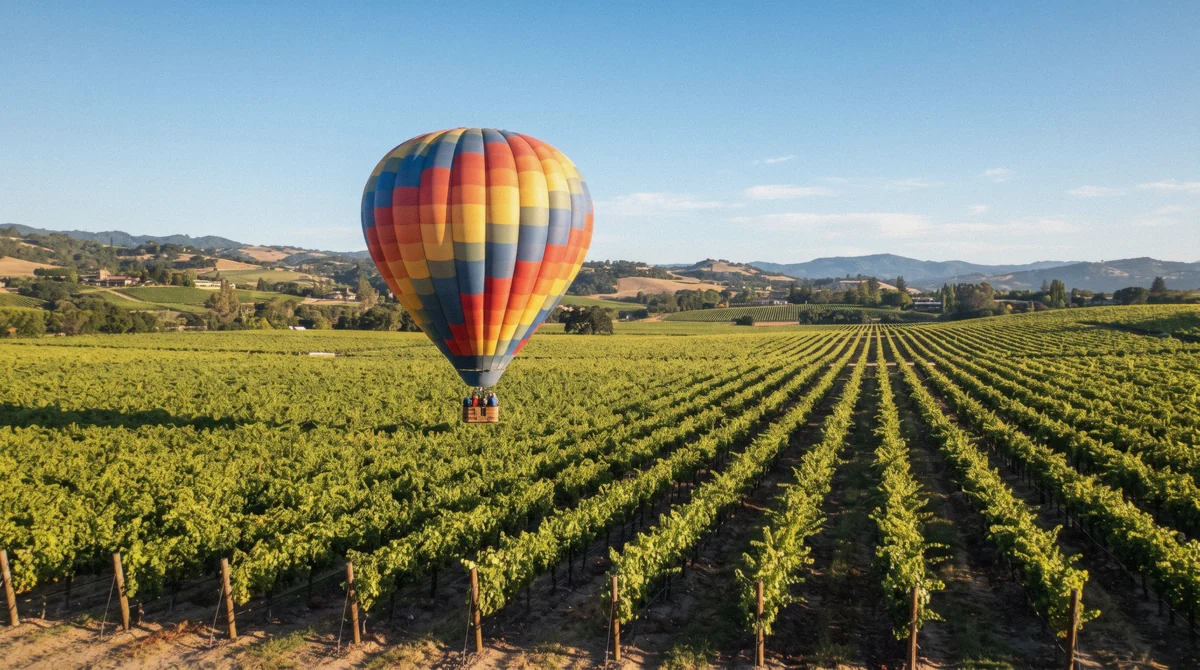
Quick answer
The best time for a hot air balloon ride in Napa Valley is April through May or September through October, thanks to mild temperatures, striking vineyard color, and fewer weather cancellations than deep winter. June is a close and reliable runner-up.
Key takeaways
- Best window: April through May and September through October, driven by mild temperatures and the lowest weather-scrub rate outside peak summer
- Runner-up: June, commonly the single most reliably flyable month, at the cost of sitting inside the valley's foggier stretch
- Month(s) to avoid: December through February, when rain drives the year's highest rate of weather cancellations
- The counterintuitive fact: fog, not rain, grounds the most spring and summer flights, and it's worse in southern Napa than upvalley near Calistoga
- Best time of day: sunrise, always, since winds are calmest and temperatures coolest right at first light
- Prices don't swing much by month, but weekends in the September and October harvest window sell out first
Seasons at a Glance
Read the Verdict column first if you're short on time, then use the two tables below it for the specifics behind each call.
| Month | Fog & Fly Conditions | Weather | Crowds | Verdict |
|---|---|---|---|---|
| January | Higher rain risk, less fog | Cool, wettest stretch of the year | Low, except holiday week | Most cancellations, book flexible |
| February | Rain tapering, less fog | Cool, still wet | Low | Rain risk, clearer than January |
| March | Occasional fog, drying out | Mild, showers easing | Low to moderate | Improving, still wet |
| April | Morning fog common | Mild, warming | Moderate | Sweet spot begins, some fog |
| May | Morning fog common, clears faster | Warm, mild | Moderate to high | Peak sweet spot |
| June | Least fog disruption of the fog window | Warm | High (school-summer start) | Reliably good flying |
| July | Fog common, backup launch used | Warm to hot | High (peak tourist season) | Warm, fog risk lingers |
| August | Fog common, backup launch used | Warmest stretch | High (peak tourist season) | Warm, fog risk lingers |
| September | Fog thinning, clearer mornings | Warm, drier | High (harvest begins) | Sweet spot, harvest gold |
| October | Clearest mornings of the year | Mild, dry | High (harvest peak) | Peak sweet spot, harvest |
| November | Fog rare, rain returns | Cooling, wetter | Low to moderate | Cooling, rain returns |
| December | Rain-driven cancellation risk | Coolest, wettest | Low, except holidays | Most cancellations, book flexible |
October stands out as the clearest, most reliable month on the chart, with September close behind as harvest gold spreads across the valley floor. December and January share the honest low point of the year, when rain, not fog, is the main reason flights get scrubbed.
Typical Temperatures and Rainfall
These are typical highs, lows, and rainfall totals for Napa Valley, not a guarantee for any single morning. Actual conditions on your dates can and do run warmer, cooler, wetter, or drier than the pattern below.
| Month | Typical high | Typical low | Rain |
|---|---|---|---|
| January | 55°F | 38°F | 4.5 in |
| February | 59°F | 39°F | 4.0 in |
| March | 64°F | 41°F | 3.0 in |
| April | 70°F | 44°F | 1.0 in |
| May | 76°F | 47°F | 0.5 in |
| June | 80°F | 49°F | 0.1 in |
| July | 83°F | 52°F | 0.0 in |
| August | 83°F | 52°F | 0.0 in |
| September | 82°F | 50°F | 0.2 in |
| October | 75°F | 46°F | 1.0 in |
| November | 64°F | 41°F | 3.5 in |
| December | 56°F | 38°F | 4.5 in |
July and August run the warmest, with January and December the coolest, and December through January the wettest by a clear margin, part of Napa's roughly 20 to 27 inches of annual rain that falls almost entirely between November and March. The valley also sees around 260 sunny days a year on average, so a clear afternoon is common even in the wetter months. Figures above reflect typical Napa Valley climate normals; check the current forecast close to your dates through the National Weather Service Bay Area office, since averages hide a fair amount of day-to-day swing.
Best Season by Traveler Type
If a photographer
come September or October, when harvest-gold vineyards, clearer morning air, and the year's most reliable flying conditions line up together.
If traveling with young kids or nervous first-time flyers
aim for June, commonly the single most reliably flyable month, so you're less likely to face a same-morning reschedule.
If visiting for the wine harvest
book September or October and pair your flight with a wine tour that afternoon; the Napa Valley wine trolley and Castello di Amorosa tour runs well alongside a harvest-season flight.
If traveling on a tighter budget
look at December through February; hotel and airfare rates tend to soften even though the balloon flight price itself barely moves by season, and rebook flexibility matters more here than any other window.
If locked into fixed travel dates rather than a flexible trip
stop worrying about the month and focus on the hour. A 6:00 AM check-in beats a later one in any season, since winds only get less predictable as the morning goes on.
Spring (March to May): The Sweet Spot Begins
Spring is when Napa Valley starts to earn its reputation as the best season for ballooning. March still carries some of winter's rain, but by April the valley is warming into the 70s during the day, even as mornings stay cool enough for a safe, calm liftoff. Vineyards are in full leaf by May, a deep green carpet under the basket that photographs differently from any other season.
Morning fog is common in this window, more so in southern Napa than up around Calistoga, so a scrub is possible but rarely the multi-day event that winter rain can be. The Yountville sunrise flight runs steadily through this stretch, and booking two to three weeks ahead is a reasonable cushion for a spring weekend.
- Highs climbing from the low 60s in March to the mid-70s by May
- Crowds moderate, rising toward the summer peak by late May
- Prices hold close to the $275 to $325 range year-round; the real cost driver is weekend versus weekday, not spring versus fall
- Morning fog is possible but usually clears well before the flight window ends
Summer (June to August): Warm Days, Watch the Fog
June is the month operators most often point to as reliably good flying weather, even though it sits inside the same April-through-July fog window as spring. July and August bring the valley's warmest, driest weather, with highs in the low 80s, but morning fog is a real factor through this stretch, especially in southern Napa near San Pablo Bay. Fog usually burns off by 10:00 or 11:00 AM, after the flight has already landed, but it can delay or occasionally scrub a launch.
Some operators keep a backup launch site upvalley near Pope Valley specifically for foggy mornings, since the upper valley clears faster than the south end. The Sonoma-to-Napa cross-county flight runs through summer with this same fog-aware routing.
- Highs in the low 80s, the warmest stretch of the year
- Crowds at their highest, driven by school-summer travel
- Morning fog is common but typically resolves within an hour or two of sunrise
- Booking three to four weeks ahead is reasonable for a summer weekend, since this is the valley's busiest tourist season
Fall (September to October): Harvest Gold
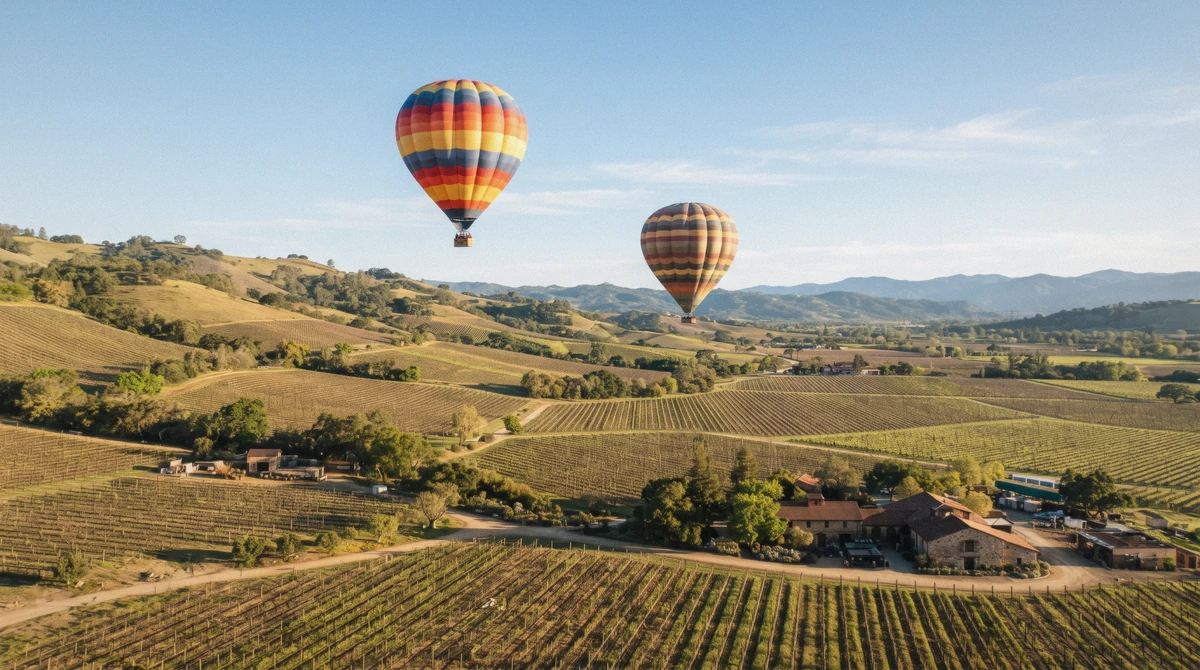
Fall is the other half of the sweet spot, and for many photographers the better half. Harvest begins in September and runs into October, turning vineyard rows from green to gold and copper, a view that only exists this way for a few weeks a year. Mornings are noticeably clearer than summer's, since fog thins out as the season progresses, and October in particular delivers some of the calmest, most reliable flying conditions on the whole calendar.
The trade-off is crowds and demand: harvest season is Napa Valley's busiest stretch for hotels and tours alike, so weekend flights sell out well ahead of the date. Pairing a fall morning flight with an afternoon at the Napa Valley wine trolley and Castello di Amorosa tour makes a strong full day during harvest.
- Highs easing from the low 80s in September to the mid-70s in October
- Crowds at their peak, driven by harvest tourism
- Clearest, most reliable flying conditions of the year, especially in October
- Book three to four weeks ahead for a harvest-weekend flight; weekday slots move faster to fill on shorter notice
Winter (December to February): Quiet Skies, Higher Risk
Winter is Napa Valley's rainy season, and it's also when hot air balloon flights face their highest rate of weather cancellations. Rain, not fog, is the main obstacle here; a passing shower can ground a morning outright in a way that summer's burn-off fog rarely does. On the days it does clear, though, winter mornings can be spectacular: crisp air, low crowds, and a valley floor that looks completely different without a single leaf on the vines.
Cold is the bigger factor than any other season, since check-in and inflation happen well before sunrise warms anything up; our what to wear guide covers the layers that make a winter morning bearable. Hotel and flight availability both loosen up in this window, and if your travel dates are flexible, a multi-day trip gives you a real shot at catching one of those clear mornings. The Yountville sunrise flight runs through winter for exactly this reason, small and flexible enough to reschedule around the week's forecast.
- Highs in the mid-50s to low 60s, the coolest stretch of the year
- Crowds at their lowest outside the holiday weeks
- The year's highest rate of weather-driven cancellations and reschedules
- Booking flexibility matters more here than the calendar date itself; build in a spare morning if you can
What Actually Affects Conditions
Most people assume a clear, sunny forecast means a guaranteed flight and a rainy one means a cancelled morning. In Napa Valley the bigger threat during spring and summer is actually fog, not rain: a layer of cool, moist air that settles over the valley floor overnight and is thickest in the southern end near San Pablo Bay, thinner upvalley toward Calistoga. Roughly 40 percent of mornings between April and July see some valley fog, which is exactly why some operators keep a second launch site further upvalley, since it clears faster than the south end.
Winter flips the equation: fog is rare, but rain and gusty wind become the real threat, and either one can scrub a flight with almost no warning the night before. Wind matters just as much as either: pilots need calm conditions to inflate safely and control the landing, so a clear but breezy morning can ground a flight just as fast as fog or rain.
Best Time of Day
Every Napa Valley balloon flight launches at sunrise, and this never changes by season; it's a function of physics, not scheduling preference. Winds are calmest and the air is coolest right at first light, and both conditions matter for a safe inflation and a controlled flight. Check-in typically runs 5:30 to 7:00 AM depending on the time of year, since sunrise itself shifts earlier in summer and later in winter.
There's no honest afternoon alternative to recommend, since winds pick up and thermals build as the day warms, which is exactly why you won't find a midday balloon flight anywhere in the valley. The Yountville flight's check-in window is built entirely around this same first-light rule.
Crowds and Prices Through the Year
Harvest weekends in September and October are the single biggest local trap: flights book out well ahead of the date as both wine tourism and balloon demand peak together. Holiday weekends, Memorial Day, the Fourth of July, and Labor Day carry the same effect on a smaller scale. Across the board, weekend flights run higher than weekday ones at most operators, a bigger swing than anything tied to the season itself.
If price is your main driver rather than the view, a winter weekday is the cheapest realistic combination on the calendar, offset against the higher chance of a weather reschedule. Our full cost breakdown covers exactly how much a flight runs across every tier and season.
What If the Weather Turns?
Weather cancellations are common and normal in Napa Valley ballooning, not a rare inconvenience, and every reputable operator plans around it. If fog, rain, or wind rules out a safe launch, you'll typically hear from the operator the morning of or the night before, with a full refund of your deposit or a free reschedule waiting on the other side, never a charge for a cancellation that isn't your doing. The safest plan on any trip through this valley is to build in a spare morning if your itinerary allows it, since a second attempt is almost always available before you leave.
For the full scenario-by-scenario breakdown, including exactly how refunds and rebookings work, see our guide to what happens if your Napa balloon ride is cancelled for weather.
The Best Month If You Only Have One Morning
If I had to rank the single best sunrise of the year to be standing in a Napa Valley basket, it would go like this:
- 1. October, for the clearest, most reliable mornings of the entire year, plus harvest-gold vineyards below
- 2. September, for the same harvest color with slightly more fog risk than October
- 3. June, for the most consistently flyable window outside the fall sweet spot
- 4. May, for strong vineyard color with lighter crowds than the summer peak
The Worst Time to Visit (Honestly)
If I'm being straight with you, January carries the hardest odds of the year, the coolest temperatures combined with the heaviest rain and the highest rate of weather cancellations of any month. It still works for travelers chasing a specific kind of shot, mist rolling low over bare winter vines under a rare clear sky, and for budget-minded visitors who can build real flexibility into a longer trip. It's a poor fit for anyone locked into a single fixed morning with no ability to reschedule, since the honest odds of a scrub are higher than any other month on the calendar.
So, When Should You Go?
April through May and September through October remain the best windows for a hot air balloon ride in Napa Valley, thanks to mild temperatures, standout vineyard color, and the lowest realistic chance of a weather scrub outside the fall sweet spot. June is the budget-conscious, schedule-friendly runner-up, reliably flyable even though it sits inside the valley's foggier stretch. The one genuine month to avoid, if your calendar allows any flexibility, is January, when rain drives the year's highest cancellation rate.
Whichever month you land on, book the earliest sunrise slot you can and treat any hot air balloon Napa Valley flight as weather-dependent by nature, not a guaranteed morning. Still deciding if the whole experience is worth the price and the wake-up call in the first place? Our honest breakdown of whether Napa Valley hot air balloon rides are worth it covers that question directly.
Frequently Asked Questions
What is the best month for a hot air balloon ride in Napa Valley?
September and October, for harvest-gold vineyards and the year's clearest, most reliable mornings, with April and May a close second for spring color and mild temperatures.
Is Napa Valley good for ballooning in winter?
It can be spectacular on a clear morning, but winter also carries the year's highest rate of weather cancellations, so build flexibility into a winter trip rather than counting on a single fixed date.
How far in advance should I book a Napa Valley balloon flight?
Two to four weeks ahead for a weekend flight in the spring or fall sweet spots, especially during harvest weekends in September and October. Weekday flights and winter dates are often bookable on shorter notice.
Morning or afternoon, which is better for a balloon ride?
Morning, always. Every flight launches at sunrise since winds are calmest and the air is coolest at first light; there is no honest afternoon alternative anywhere in the valley.
When are prices lowest for a Napa Valley balloon ride?
Weekdays run lower than weekends year-round, and winter weekdays are the cheapest realistic combination, though the trade-off is a higher chance of a weather-driven reschedule.
When is fog season for Napa Valley balloon rides?
Roughly April through July, heaviest in southern Napa near San Pablo Bay and lighter upvalley near Calistoga. Fog typically clears by mid-morning, after the flight has already landed, but it can occasionally delay or scrub a launch.
I have flown October mornings so clear you could pick out the Golden Gate, and January mornings scrubbed twice before the third attempt finally went. Both are honestly part of what makes this valley worth flying over, if you give yourself the flexibility to catch it on a good day.