Is Hot Air Ballooning in Napa Valley Safe? Honest Answer and Who Shouldn't Go

Is hot air ballooning safe in Napa Valley? Yes, for nearly everyone: every commercial flight here is flown by an FAA-certified pilot holding a balloon rating, and commercial ballooning's national safety record, tracked by the National Transportation Safety Board, is strong compared with most other forms of aviation. It genuinely is not risk-free, and it is not the right activity for every traveler; pregnancy, an inability to stand for close to an hour, and a handful of health and mobility conditions are worth knowing before you book. Below we cover the real regulation, the honest risks and how good pilots manage them, who should think twice, and how to vet an operator before you pay. Compare every hot air balloon Napa option once you're ready.
Quick answer
Hot air ballooning in Napa Valley is statistically very safe. Every pilot flying passengers for hire holds an FAA commercial certificate with a balloon rating, and the activity's national safety record, tracked by the National Transportation Safety Board, compares well against most other forms of aviation. It is not risk-free, and it genuinely is not for everyone.
Key takeaways
- FAA-certified pilots and a strong national safety record for commercial ballooning, tracked by the National Transportation Safety Board
- The two exclusions that rule out the most travelers by far: pregnancy and not being able to stand unassisted for close to an hour
- Industry-standard minimum height is 48 inches, with 6 years old the commonly stated minimum age, though the height rule matters more than the birthday
- Vet an operator the way you would any small aircraft charter: ask about pilot certification and insurance, and watch for a genuine willingness to scrub marginal weather
- The full restrictions table further down covers pregnancy, age, weight, health conditions, and more, condition by condition
The Kinds of Safety, Separated
"Is it safe" actually bundles several different questions together, and it helps to answer them one at a time.
In-flight safety
The pilot's training, the balloon's condition, and the go or no-go call made before every launch. This is the bulk of what follows below.
Ground and boarding safety
Climbing into a roughly four foot basket wall, standing for the full flight, and the landing itself. Covered in the risks and restrictions sections further down.
Transport safety
The predawn shuttle to the launch field and the ride back after landing. Standard licensed shuttle vans, no different from an airport transfer.
Destination safety
A different question from activity safety entirely. Napa Valley's general crime and public safety picture is a matter for your own government's official travel advisory service, not a tour blog's opinion; this guide covers activity safety inside the flight itself, a narrower and more answerable question.
Health safety
Cold at a predawn check-in, sun once you're airborne, and a full hour on your feet. Covered in the restrictions table and the packing note below.
As of July 2026, no FAA safety alert or operator-level suspension was in effect for Napa Valley's commercial balloon operators. Always confirm an operator's current standing directly before you book, since this guide is a snapshot, not a live status feed.
Emergency Numbers and Medical Care
Call 911 for any genuine emergency; it works from any mobile phone throughout Napa County. Ground crews stay in radio contact with the pilot for the entire flight and can call ahead if a landing needs to be met by anything more than the usual chase vehicle. Queen of the Valley Medical Center in the city of Napa is the nearest full hospital to most Yountville launch sites, roughly 20 to 30 minutes by road.
Pilots and ground crew carry basic first-aid supplies; ask your operator directly what their own emergency protocol looks like if that detail matters to your planning.
Can Children Visit Safely?
Yes, once they clear the height and standing requirements. The floor is a 48-inch minimum height industry-wide, with 6 years old the commonly stated minimum age, and every rider needs to stand unassisted for the full flight with no exceptions for holding a child. For the full age-by-age breakdown, what each operator actually enforces, and which tours suit which family, see our flying with kids in Napa Valley guide.
Is It Safe for Seniors?
For most healthy adults, yes. The honest physical asks are the early 5:30 to 7:00 AM check-in, a cold predawn wait before the burner ever fires, climbing into a basket over a wall roughly four feet high, and standing the entire 45 to 60 minutes aloft with nowhere to sit. Travelers managing a back or joint condition should ask their operator about the easiest basket entry point and disclose any concern honestly before boarding.
Nervous about the whole morning regardless of age, our first-timer's guide walks through exactly what to expect step by step. Anyone who would rather skip the standing requirement entirely still has a real option: the seated, land-based Napa Valley Wine Trolley and Castello di Amorosa tour covers the valley's vineyards from an open-air trolley seat instead of a basket.
Who Should Reconsider
If you're pregnant
hot air ballooning is not offered to pregnant passengers at any stage on this site's tours; see the seated alternative below.
If you have a heart condition or high blood pressure
talk to your doctor first and ask the operator honestly about the cold predawn wait and the full hour of standing.
If you've had recent surgery or have a serious back problem
a firm landing can jolt the whole basket with nowhere to brace in a seated position; this is a real consideration, not a formality.
If you have limited mobility
boarding means climbing over a roughly four foot basket wall, and the entire flight is spent standing; ask your operator about assisted boarding before you book.
If you're afraid of heights
most nervous first-timers find the basket calmer than expected, since it doesn't sway or bank the way a swing or roller coaster does; see the scenario below on how pilots handle in-flight anxiety.
The Safety Record: What the Numbers Say
No independent body publishes a Napa Valley-specific hot air balloon accident count, and this guide won't invent one to fill that gap. What can be said plainly, sourced to the two bodies that actually track and regulate American ballooning, the National Transportation Safety Board and the Federal Aviation Administration: commercial hot air balloon operations carry a strong safety record relative to general aviation as a whole, and fatal accidents in this category are rare nationally against the volume of commercial flights operated every season. Framed against everyday risk, a supervised sunrise flight with a certified pilot sits closer, in the order of magnitude of risk it carries, to a routine car ride to the airport than to a genuinely high-risk adventure activity, a comparison the industry itself commonly draws.
It's also worth being honest about where past incidents have led. Where serious accidents have occurred nationally, the pattern that follows tends to be the same: closer scrutiny of pilot currency and recurrent training, tighter aircraft inspection cycles, and clearer weather-minimum guidance for commercial operators, the kind of regulatory tightening that shows up industry-wide rather than at a single company. That response is part of why the safety record has held up over time rather than eroding.
One more disambiguation worth making explicit: this section covers whether the activity itself is safe, not whether Napa Valley as a destination is safe from crime or civil unrest, a different question entirely. For that, your own government's official travel advisory service, the US State Department's four-level system for American travelers, or the equivalent for your own country, is the right source, not a tour operator's opinion.
What Makes It Safe(r) Here: Rules and Local Practice
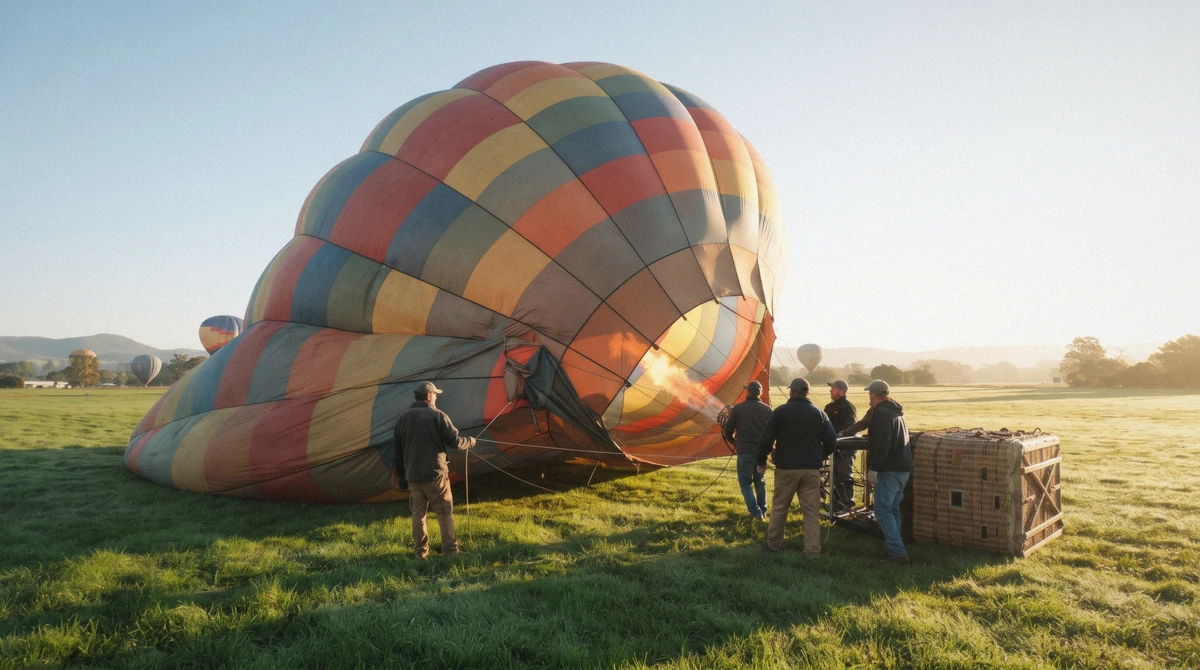
The Federal Aviation Administration is the named authority behind this activity. Every pilot flying passengers for hire holds a commercial pilot certificate with a balloon rating, and every balloon in commercial service carries its own FAA airworthiness certification and inspection cycle, the same regulatory backbone that governs any small aircraft operation, not a separate, looser standard invented for tourism. Reputable operators carry passenger liability insurance as standard business practice, though individual coverage isn't independently published operator by operator, so it's worth confirming directly before you book.
The go or no-go call on any given morning is made by the pilot in command, following FAA visual flight rules, based on wind, visibility, and cloud ceiling at the launch site. This is exactly why one operator can be flying on a given morning while a different one, launching from a slightly different field or simply reading conditions more conservatively, chooses to scrub. Where oversight genuinely runs thin is in any public, Napa-specific inspection log for a given operator on a given day, since that level of detail isn't independently published anywhere a traveler can check. That's exactly why operator choice ends up being your single biggest safety lever, the subject of the vetting section below.
The Real Risks and How Good Tours Manage Them
Five real risk mechanisms specific to hot air ballooning, each paired with the mitigation a competent operator actually applies:
| Situation | What a good operator does | Warning sign |
|---|---|---|
| A firmer than expected touchdown, depending on wind at ground level | Pilot selects the safest available landing site and briefs the landing position, knees bent, hands on the basket's inner handles, before descent begins | No landing briefing at all, or a rushed one delivered right as the ground comes up |
| The propane burner's open flame sits directly above the basket for the whole flight | Burner placement and basket design keep the flame clear of passengers, and the preflight briefing covers exactly where to stand and what to avoid touching | Passengers allowed to crowd directly beneath the burner, or a crew that skips the briefing entirely |
| Wind shifting or strengthening once the balloon is already airborne | Pilot continuously reads conditions and can adjust altitude, shorten the route, or choose an earlier landing site rather than press on | A pilot who keeps flying into visibly worsening conditions instead of adjusting the plan |
| Boarding or exiting a basket with a wall roughly four feet high | Ground crew physically assist boarding and give clear step-by-step instructions, especially to less mobile passengers | No hands-on help offered at boarding, or a rushed loading process while the balloon already tugs at its tether |
| A full hour on your feet with no seat, harder on a body already tired or unsteady | Operators disclose the standing requirement clearly before you pay, and honest staff say plainly if a booking isn't a good fit | A booking agent who brushes off a direct question about the standing requirement |
The champagne toast and brunch afterward is ordinary catering, handled the same way any restaurant service is, so food safety isn't a distinct concern the way it might be for a jungle or river tour. Theft is a minor property matter, not a physical-risk finding: you're one of a small, supervised group for the entire flight, and the real exposure point is an unattended bag left in the shuttle van or on the ground while everyone's attention is on the inflating balloon. Keep valuables zipped in a bag you carry yourself rather than leaving anything loose at the launch field.
How to Choose a Safe Operator in Napa Valley
The honesty above only earns its keep if it turns into something you can act on when booking. Ask directly: is the pilot's FAA commercial certificate and balloon rating current, does the balloon carry a current airworthiness inspection, and is passenger liability insurance confirmed. Green flags worth watching for: an unhurried, thorough preflight briefing, hands-on boarding assistance rather than a rushed scramble, crew who ask about any medical condition or mobility concern before you climb in, and a genuine willingness to scrub a flight outright rather than push marginal weather.
Red flags, named specifically: a rushed waiver signature with no real briefing behind it, a crew member saying something like "we can probably still fly, let's just go" during clearly marginal weather, no mention of the standing requirement until you've already arrived at the field, and unattended bags at the launch site with no comment from staff. Our Yountville sunrise flight publishes its safety highlights and certified-pilot credentials up front, and the Sonoma-to-Napa cross-county flight does the same for its own route and crew.
On insurance, standard travel insurance typically covers a commercial hot air balloon ride's injury risk without an added adventure-sport rider, since it's a licensed, FAA-regulated aviation activity rather than a self-directed extreme sport. Still, check your own policy's aviation exclusion clause, since some basic plans exclude any aircraft beyond a scheduled airline. That's a health and injury question, distinct from whether your trip cost is protected if weather cancels your flight outright, which our weather and cancellation guide covers in full.
Who Shouldn't Do It: Restrictions at a Glance
Every restriction below reflects a real, sourceable consideration for a Napa Valley flight, not an invented one.
| Restriction | Typical rule on Napa Valley tours | Why it exists | Ask before booking if... |
|---|---|---|---|
| Pregnancy | Not offered to pregnant passengers at any stage | The jolt of a firm landing and a full hour of standing carry real risk during pregnancy | You're pregnant at any stage |
| Minimum age | Commonly 6 years old, though height is the real gate | Children need to follow safety instructions and stand unassisted for the whole flight | You're traveling with a young child, see our flying with kids guide for the full breakdown |
| Maximum age | None published by any operator here | General good health and the ability to climb into the basket matter more than age itself | A health condition makes an early start and an hour of standing genuinely difficult |
| Minimum height | 48 inches (122 centimeters), industry-wide | Below this height a passenger typically can't see over the basket wall or reach the handholds safely | Your child is close to this line, measure at home rather than guessing |
| Weight (individual) | No published per-passenger weight limit; capacity is set by headcount, not a stated figure | Baskets are certified for a maximum passenger count and total load, not an individual cutoff | You have any concern about fit or comfort in a shared basket, ask the operator directly |
| Weight (combined/total load) | Not publicly published by name; total occupant load is set by the balloon's manufacturer rating | Total weight affects how much heat the burner needs to hold altitude | You're booking a small private basket and want certainty on total load |
| Heart condition or high blood pressure | No formal exclusion, but a real consideration | An early start, a cold predawn wait, and a full hour of standing add up to real exertion | You have a diagnosed heart condition or uncontrolled blood pressure |
| Back problems or recent surgery | Listed as not suitable by our operators | A firm landing can jolt the whole basket with no seated position to brace in | You've had recent spinal or abdominal surgery, or a back condition a jolt could aggravate |
| Mobility limitations | Listed as not suitable where significant | Boarding means climbing over a roughly four foot basket wall, and the whole flight is spent standing | Mobility affects standing for an hour or climbing without assistance |
| Epilepsy | No formal exclusion | The flight has no strobing lights or confined-space triggers | A seizure condition is affected by early mornings, cold, or altitude change, ask your doctor about this specific itinerary |
| Intoxication | Not permitted | Crew need sober passengers who can follow safety instructions immediately during boarding and landing | You or a companion plan to drink before a predawn pickup |
What If Something Goes Wrong: Scenarios, Honestly
The wind picks up once you're already airborne
What happens: conditions can shift over the course of an hour even on a morning that started calm. What the pilot does: adjusts altitude, may shorten the route, and selects an earlier or different landing site than originally planned. What you do: follow the landing-position briefing exactly the moment it's called, rather than waiting to see how things develop on your own.
The landing is firmer than expected
What happens: baskets sometimes touch down with a real bump depending on wind at ground level. What the crew does: ground crew are positioned to steady the basket immediately on touchdown. What you do: hold the braced landing position until a crew member tells you it's clear to relax, even once the basket has stopped moving.
A passenger feels unwell or anxious mid-flight
What happens: cold, an early wake-up, or genuine fear of heights can surface once you're aloft. What the crew does: pilots are trained to talk a nervous passenger through it and can radio ground support if something more serious develops. What you do: say something the moment you feel off, rather than trying to quietly push through it; a pilot would always rather know.
The weather turns before you even take off
What happens: fog, wind, or rain can force a scrub at the field itself, sometimes after you've already arrived. What the crew does: a reputable operator cancels outright rather than launch into marginal conditions, and offers a reschedule or refund. What you do: treat a same-morning scrub as the system working correctly, not a failure.
Our weather and cancellation guide covers exactly what happens next.
Across all four scenarios, one thing sits entirely within your control: choosing a certified, transparent operator and disclosing any real health or mobility concern honestly before you climb in. That single choice does more for your outcome than anything that happens once you're airborne.
Safer Alternatives If You're Excluded
Travelers ruled out by pregnancy, a recent surgery, or limited mobility still have a genuine option: the Napa Valley Wine Trolley and Castello di Amorosa Castle tour covers the valley's vineyards and a medieval Tuscan-style castle winery from a seated, open-air trolley, no height, standing, or flight requirement involved at $145 per person. It's also a genuinely good afternoon pairing for anyone who does fly and wants a second, lower-key half of the day.
Frequently Asked Questions
Has anyone died hot air ballooning in Napa Valley?
No independently published record ties a fatal accident specifically to Napa Valley's commercial balloon tourism operations. See the safety record section above for the honest national framing of what is and isn't publicly tracked.
Can I go on a hot air balloon ride while pregnant?
No. Pregnant passengers aren't accepted at any stage on this site's tours; see the restrictions table above and the seated wine trolley alternative.
Is there a weight limit for a Napa Valley balloon ride?
No published individual or combined weight limit. Capacity is set by headcount and the balloon's total load rating rather than a stated figure; raise any specific concern with your operator before booking.
What is the minimum age for a Napa Valley balloon ride?
Commonly 6 years old, but the real gate is the 48-inch height requirement and the ability to stand unassisted for the whole flight. See our flying with kids guide for the full breakdown.
Is hot air ballooning safe for someone with a heart condition?
No formal exclusion exists, but the combination of a cold predawn wait, an early start, and a full hour of standing is a real consideration. Talk to your doctor and mention the itinerary before booking.
What happens if the weather turns bad during my flight?
The pilot adjusts altitude or route and selects a safe landing site early; weather cancellations before takeoff are never charged to the passenger. Our weather and cancellation guide covers the full policy.
Is hot air ballooning safe for someone afraid of heights?
Most nervous first-timers find the basket calmer than expected, since it doesn't sway or bank the way a swing or roller coaster does. Crew are trained to talk anxious passengers through it; see the in-flight scenario above.
Hot air ballooning in Napa Valley is safe for nearly everyone who books it, backed by FAA-certified pilots and a strong national safety record for commercial ballooning. It genuinely is not risk-free, and pregnancy, certain health conditions, and the standing requirement rule out a real share of travelers honestly rather than quietly. The one lever most within your control is the operator you choose: ask about certification, insurance, and their weather policy before you pay.
Still deciding if a flight is worth the wake-up call and the price at all? Our honest breakdown of whether Napa Valley hot air balloon rides are worth it covers that question directly.